
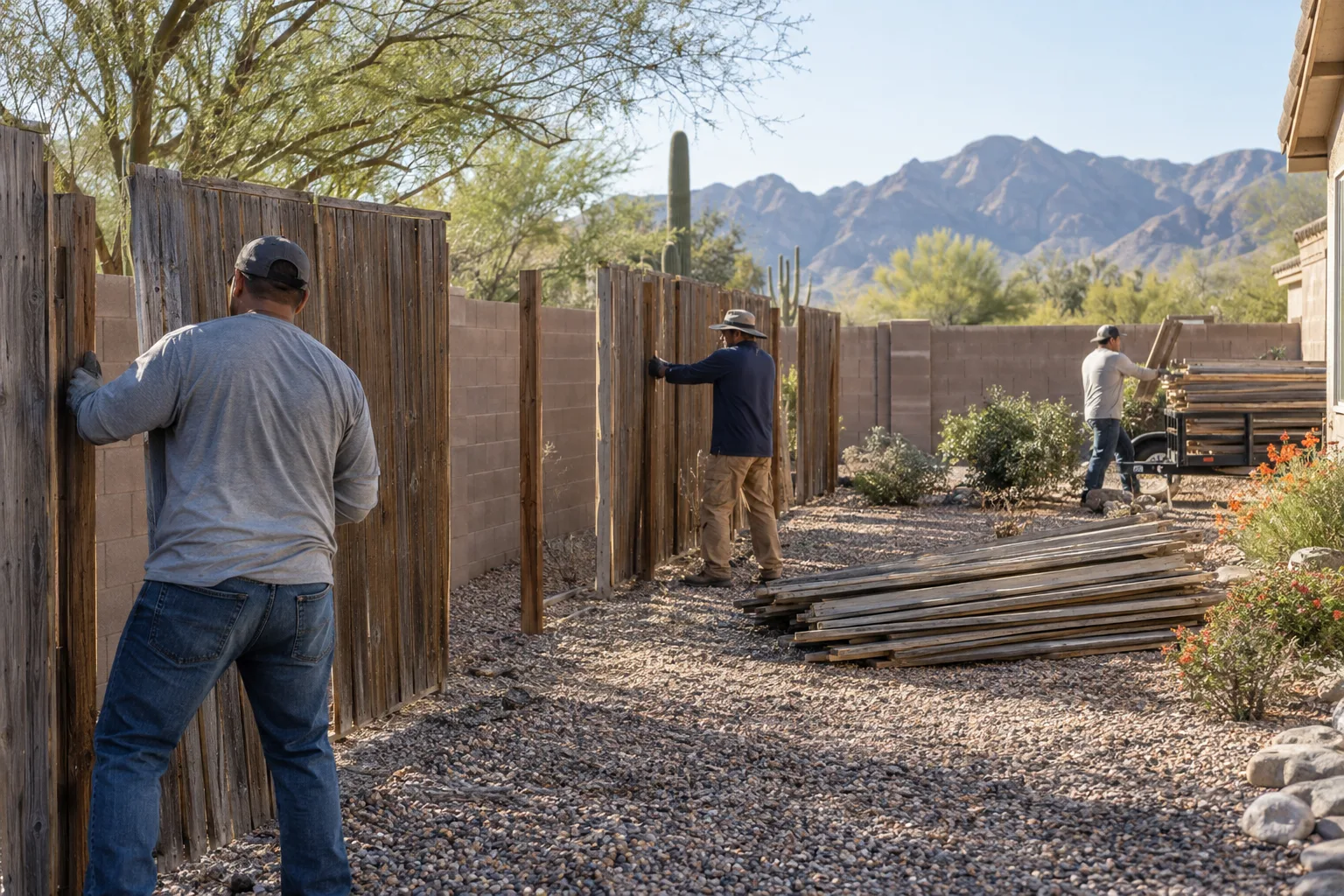
Before a fence is removed, confirm that the fence is yours to remove and that the work will not expose an unresolved boundary, pet, pool, or access problem.
Confirm the removal line
A fence near a property line may be shared, offset, or tied into a neighbor’s gate. Review surveys or property records when ownership is unclear, and speak with affected neighbors before scheduling. A removal crew should not be asked to decide a boundary dispute on site.
Check local review and utility conflicts
The City of Tucson says fence and wall work requires zoning review, and retaining conditions can trigger engineered plans. Removal can also expose irrigation, low-voltage cable, buried electrical, or gas. Use the appropriate utility-locate and permitting process for the property’s actual jurisdiction.
Fence removal brief
- Linear footage and height
- Wood, chain link, ornamental metal, or mixed material
- Post material, spacing, and visible concrete
- Gates, latches, and attachments
- Vines, trees, irrigation, and lighting
- Shared boundary or HOA approval
- Temporary security, pet, or pool-barrier plan
- Loading access and the requested finish at post holes
Plan what happens while the fence is open
Removing panels may leave a yard exposed. Arrange temporary barriers before work if the fence controls pets, children, pool access, or site security. State whether post holes should be left for a replacement contractor or made safe under the agreed scope.
Photograph the posts
Posts often decide the labor and debris weight. Send close views of several bases, along with the longest continuous run and every corner or gate. Concrete-set steel posts, wood posts in soil, and posts tied into masonry require different plans.
Review the fence removal scope before calling with the measured run.